
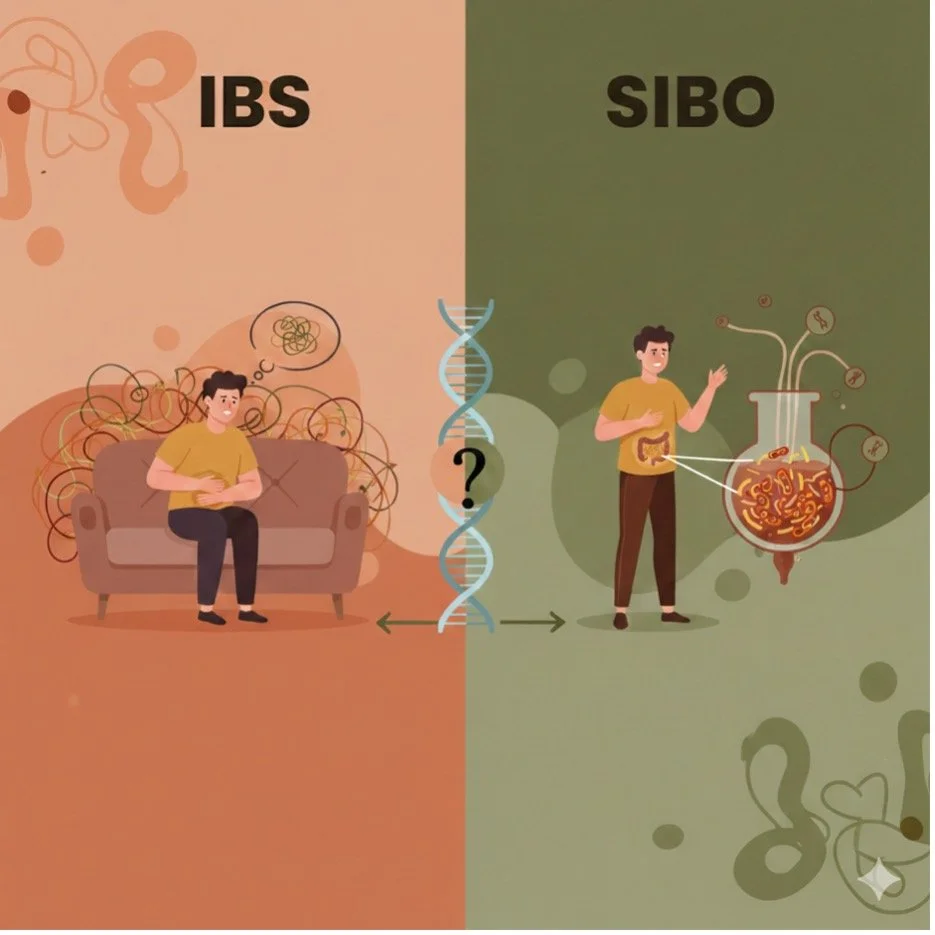
IBS vs SIBO, what is the difference?
The gut microbiome has an essential part to play in both IBS and SIBO. It is important to appreciate that the gut microbiome consists of trillions of microbes these are dominated by bacteria but also include virus’s, fungi, archaea and protozoa. Together, they help regulate digestion, immunity, and gut function but dysregulation of them causes IBS and SIBO symptoms.
Many people receive an IBS diagnosis and continue to experience bloating, discomfort, and irregular bowel habits. Diet changes often bring limited relief. Confusion follows…
There are many reasons for this, but it is useful to understand whether or not it is driven by Small Intestinal Bacterial Overgrowth (SIBO).
Understanding the difference helps guide better decisions.
What is IBS?
Irritable Bowel Syndrome (IBS) describes a functional digestive disorder. Gut structure appears normal. Gut function changes. Typical symptoms include bloating, abdominal pain or discomfort, diarrhoea, constipation or both, gas and altered bowel habits Diagnosis relies on symptom criteria and exclusion of other conditions.
What is SIBO?
SIBO refers to excessive microbes in the small intestine. Bacteria ferment food earlier than expected. Gas production increases. Symptoms follow. Common features include boating, often pronounced gas, abdominal discomfort that includes cramps and trapped wind, diarrhoea and or constipation, food intolerances and possible nutrient absorption issues. Symptoms more suggestive of SIBO are frequent belching due to the gas produced by microbes from fermenting food in the small intestine. The gas has a shorter "exit route" upwards compared to fermentation in the large intestine hence the belching. Excessive upper abdominal pressure and discomfort from cramps and trapped wind and early fullness after meals. Bloating soon after eating due to fermentation by the microbes in the small intestine. Symptoms worsening through the day as the microbe’s ferment on your food, intolerance to fermentable carbohydrates and certain foods. Occasionally it can cause bad breath. These patterns appear less typical in IBS alone.
Why IBS and SIBO Get Confused
Irritable bowel syndrome and small intestinal bacterial overgrowth are frequently mistaken for one another. The reason is simple. Their symptoms look very similar. People with either condition may experience bloating, excess gas, abdominal discomfort, and changes in bowel habits. From a patient’s perspective, the day-to-day experience can feel almost identical. However, the labels describe very different things. An IBS diagnosis describes a ‘pattern of symptoms.’ SIBO describes a ‘mechanism’ that may be contributing to those symptoms. In some individuals, both can exist at the same time. Understanding this distinction helps explain why progress can sometimes stall when treatment focuses on only one explanation.
How Often Does SIBO Appear in IBS?
Research suggests a meaningful overlap between IBS and SIBO, although prevalence estimates vary widely. Some studies report rates around 30 percent, while others describe figures exceeding 50 percent. These differences do not necessarily reflect contradictions in the science. They arise from variations in breath test protocols, differences between IBS subtypes, and study design factors. The key message is one of balance. Not every case of IBS involves SIBO. Not every case of SIBO meets IBS criteria. Breath testing itself also carries recognised limitations. The numbers highlight a trend rather than a certainty.
Key Differences Between IBS and SIBO
IBS is considered a functional gastrointestinal disorder. Diagnosis is based primarily on symptoms and clinical criteria. Management strategies are often broad and may include dietary modification, stress regulation, and gut-directed therapies. SIBO, by contrast, involves bacterial overgrowth within the small intestine. Diagnosis is typically supported by breath testing. Management often requires more targeted interventions aimed at reducing excessive fermentation and restoring motility patterns. While symptoms overlap, the underlying drivers may differ significantly.
Why the Distinction Matters
Treatment strategy depends on what is driving the symptoms. For example, increasing fibre intake may improve bowel function in some IBS presentations but worsen bloating in individuals with SIBO. A low FODMAP diet may reduce symptoms yet fail to address bacterial overgrowth if present. Food reactions may appear inconsistent, creating confusion and frustration. Certain patterns, such as frequent belching, upper abdominal pressure, or bloating that develops soon after meals, may suggest fermentation occurring higher in the digestive tract. These nuances influence clinical decision-making.
Clues Worth Noticing
Symptom patterns sometimes raise suspicion of SIBO. Persistent bloating, discomfort that appears quickly after eating, frequent belching, and reactions to a wide range of foods are commonly reported features. Constipation that does not respond to fibre may also warrant further exploration. Onset of symptoms following infection, antibiotic use, or prolonged stress can provide additional context. These clues do not confirm SIBO, but they help guide a more focused discussion.
Testing for SIBO
Breath testing measures hydrogen and methane gases produced by microbial fermentation. The test is non-invasive and can offer useful functional insight. Interpretation, however, requires care. Results are protocol dependent, and false positives or negatives can occur. Breath testing should therefore be considered part of a wider clinical assessment rather than a standalone answer.
Additional Clues from Stool Testing
Stool testing does not diagnose SIBO, as it primarily reflects the microbial environment of the large intestine. Breath testing remains the primary assessment tool for suspected overgrowth in the small intestine. That said, stool analysis can sometimes provide helpful context, particularly when constipation is present. Patterns such as reduced microbial diversity, imbalances associated with slower transit, or elevations in methane-associated organisms may support the broader clinical picture. Findings must always be interpreted alongside symptoms and history.
Hydrogen Sulphide and Digestive Symptoms
Hydrogen sulphide represents a newer area of interest in SIBO research. Traditional breath tests measured hydrogen and methane, while some newer technologies now include hydrogen sulphide detection. This gas has been associated with diarrhoea-predominant symptoms, urgency, abdominal discomfort, and gas with a sulphur-like odour. Research continues to explore its clinical relevance. Not all breath tests currently measure hydrogen sulphide, and symptoms alone cannot identify which gases are involved. Because dietary strategies and antimicrobial approaches may differ between hydrogen, methane, and hydrogen sulphide patterns, it is important to keep this possibility in mind during assessment and treatment planning.
What You Can Do
When digestive symptoms persist, it helps to step back and observe patterns. Timing of symptoms, food responses, bowel habits, upper gut sensations such as pressure or belching, and relevant medical history all provide valuable information. Digestive symptoms are rarely random, even when they feel unpredictable. Labels such as IBS can be helpful starting points, but they do not always explain why symptoms persist. Exploring potential drivers, including SIBO, can open the door to more targeted and effective strategies. With careful assessment, appropriate testing, and an individualised plan, many people see meaningful improvements in bloating, comfort, and food tolerance. If your symptoms continue despite your best efforts, it may be time to step beyond symptom management and look more closely at what your gut is trying to tell you.
References
Efremova, I., et al. (2022) Prevalence of small intestinal bacterial overgrowth in irritable bowel syndrome: A systematic review and meta-analysis. Available at:https://pmc.ncbi.nlm.nih.gov/articles/PMC10303511/
Ghoshal, U.C., et al. (2017) Small intestinal bacterial overgrowth and irritable bowel syndrome: A systematic review and meta-analysis. Neurogastroenterology and Motility. Available at:https://pubmed.ncbi.nlm.nih.gov/28556416/
Sikaroudi, M.K., et al. (2023) Effects of a low FODMAP diet on irritable bowel syndrome: A systematic review and meta-analysis. Available at:https://pubmed.ncbi.nlm.nih.gov/38711328/
Bogdanowska-Charkiewicz, D., et al. (2023) Low FODMAP diet and gastrointestinal symptoms: An umbrella review. Nutrients. Available at:https://www.mdpi.com/2072-6643/15/7/1684